
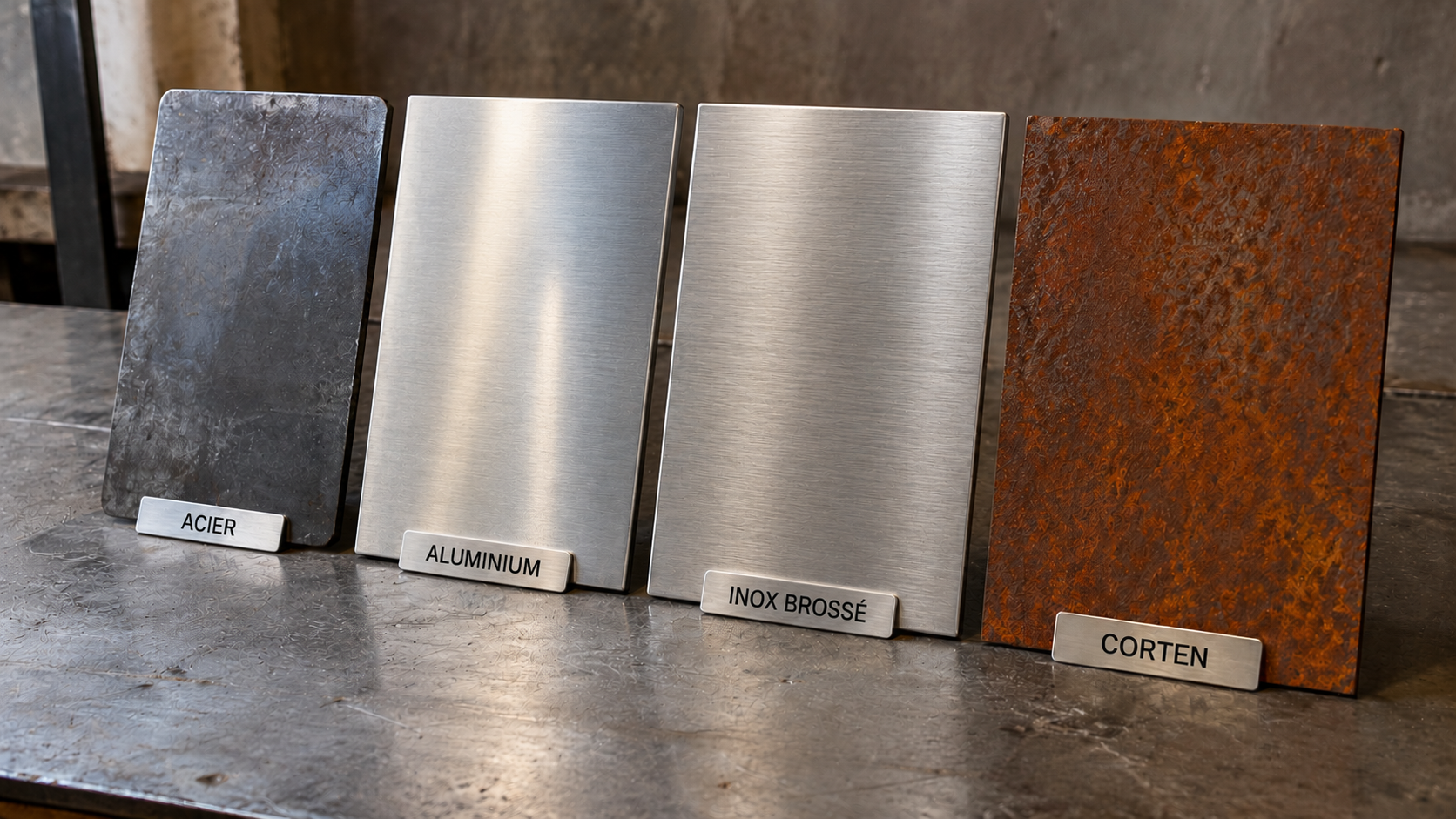
Steel, Stainless Steel, Aluminium or Corten: Which Metal Should You Choose for Your Project?
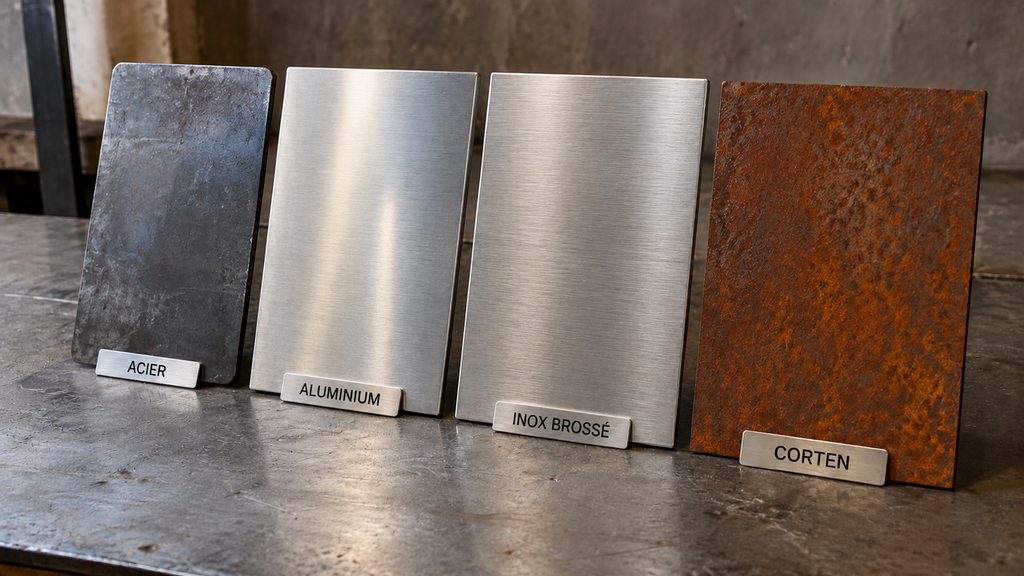
When designing a sign, decorative feature, technical part or custom-made installation, choosing the right metal quickly becomes an important part of the project.
Steel, stainless steel and aluminium each have their own properties, appearance and constraints. In addition to these main families, there are also specific grades such as Corten weathering steel, whose particular composition gives it a very distinctive behaviour when exposed to corrosion.
There is therefore no single metal that is better than all the others. The right material is the one that best suits the intended use, environment, desired appearance, manufacturing processes and budget of your project.
Here are a few key points to help you make an initial choice.
Steel: Versatile and Cost-Effective
Steel is probably the most versatile material for manufacturing custom metal parts.
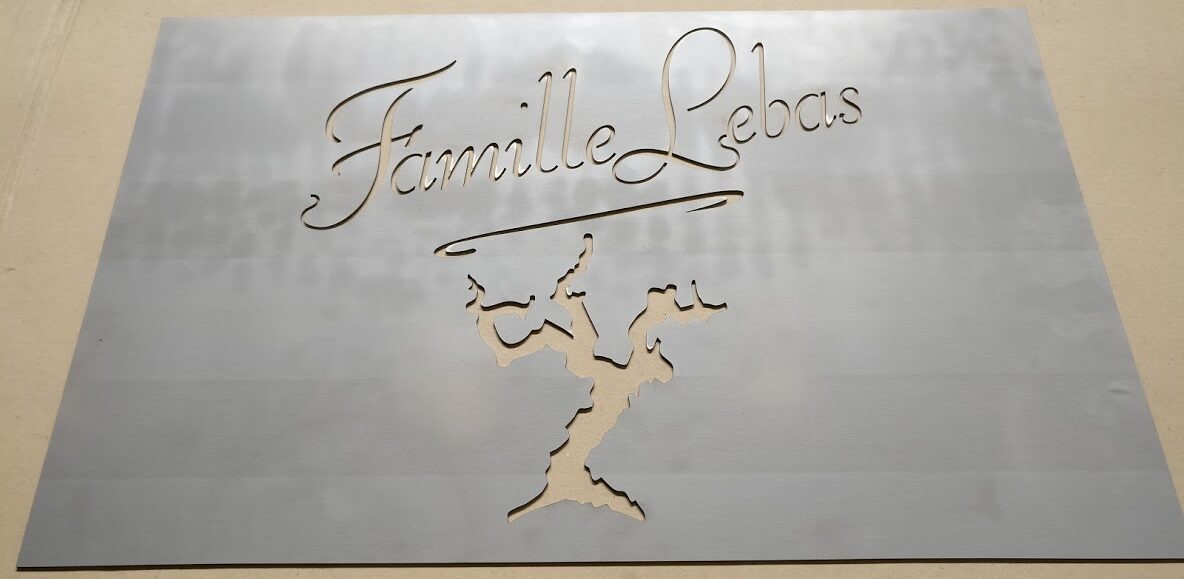
It can easily be laser-cut, bent and welded, making it suitable for everything from technical components to signs, railings and decorative features.
Main advantages
- Wide range of manufacturing possibilities
- Good mechanical strength
- Suitable for large components
- Relatively low material cost
- Easy to paint or powder-coat
- Suitable for both technical and decorative projects
Its main drawback is its susceptibility to corrosion. For outdoor use or humid environments, suitable protection will therefore generally be required.
Paint or powder coating, for example, can protect the steel while also providing the desired colour and finish.
In terms of cost: steel is generally the most economical reference material. Its price per kilogram is relatively low and its widespread availability means that many sheet sizes and thicknesses are readily available.
Ideal for: railings, signs, furniture, decorative panels, technical parts and a wide range of interior and exterior projects.
Stainless Steel: Durable, Attractive… but More Expensive
Stainless steel is also a type of steel. Its composition, particularly its significant chromium content, enables it to naturally form a very thin passive layer that protects it against corrosion when the appropriate grade is used for its environment.
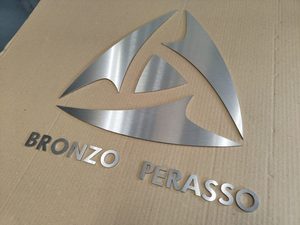
It is available in a range of surface finishes — including raw, brushed and polished — and provides a distinctive contemporary appearance.
However, stainless steel is not completely immune to its environment. The appropriate grade and finish must be selected according to the conditions in which the part will be used.
Main advantages
- Very good corrosion resistance when the correct grade is selected
- Modern, high-quality appearance
- Can be used without painting
- Good durability
- Suitable for laser cutting, bending, welding and engraving
What about the cost?
This is an important consideration: stainless steel is significantly more expensive than standard steel and aluminium.
The additional cost is not necessarily limited to the raw material. Depending on the part, some manufacturing and finishing operations can also be more demanding.
Stainless steel is therefore particularly worthwhile when its properties — corrosion resistance, durability or surface appearance — provide genuine added value to the project.
Ideal for: signage, professional plaques, decorative features, outdoor components, parts requiring good resistance to moisture, and projects where the natural appearance of the metal is part of the design.
Aluminium: Lightweight Above All
One characteristic of aluminium is immediately noticeable: its density is approximately three times lower than that of steel.
For identical dimensions, an aluminium component can therefore be considerably lighter. This makes it particularly useful for signs, wall-mounted panels or objects that need to be easy to handle and install.
Aluminium also offers good natural corrosion resistance thanks to the thin oxide layer that spontaneously forms on its surface.
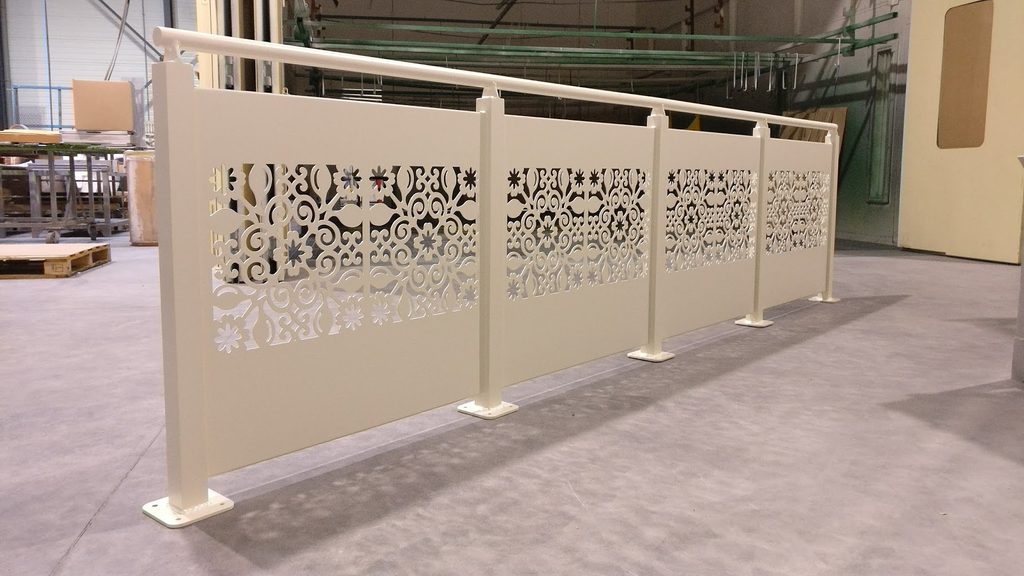
Why is aluminium rarely used with a raw finish?
Unlike stainless steel, the appearance of untreated aluminium can change quite easily. Its relatively soft surface is sensitive to scratches, handling marks and variations in appearance caused by natural oxidation.
Depending on the product, raw aluminium sheet may also show visual variations resulting from manufacturing, storage or handling.
For visible components where appearance matters, a surface finish is therefore generally preferred, such as:
- Powder coating
- Anodising
- Painting
- An appropriate mechanical finish
These treatments provide a more consistent appearance and, depending on the process selected, can also improve surface protection.
What about the cost?
Per kilogram, aluminium is generally more expensive than standard steel.
However, comparing materials solely on a price-per-kilogram basis can be misleading. Because aluminium is approximately three times less dense than steel, considerably less mass is required to produce a component of the same dimensions and thickness.
For many sheet-metal projects, the material cost of an aluminium solution can therefore remain relatively close to that of a steel solution, even though aluminium costs more per kilogram.
The required finish must then be taken into account: anodised or powder-coated aluminium obviously cannot be compared directly with untreated steel.
Ideal for: signs, signage systems, plaques, decorative objects, lightweight components and customised products.
Corten: A Steel Designed to Protect Itself Through Rust
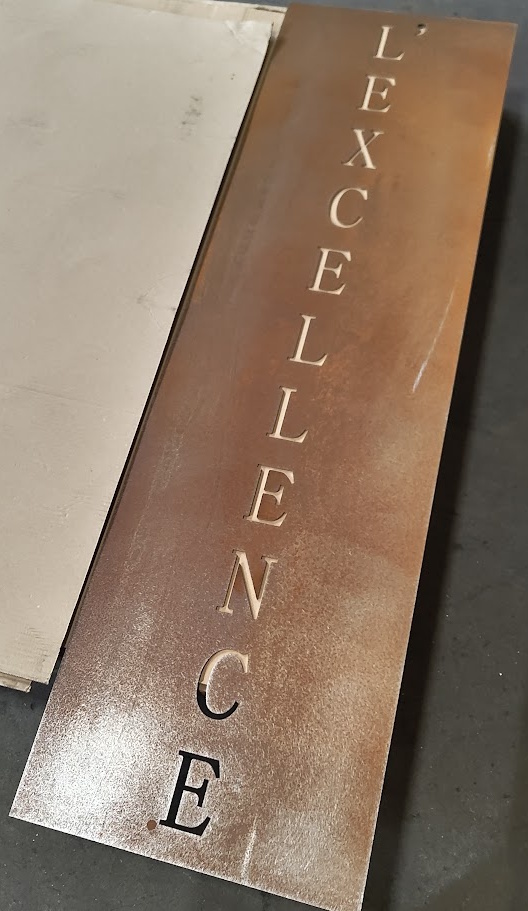
Corten is sometimes described as though it were an entirely different material. In reality, it is a weathering steel with a specific chemical composition designed to promote the formation of a particular corrosion layer.
This distinction is important.
Corten does not simply receive a decorative “rust finish”. When exposed to suitable atmospheric conditions, the metal genuinely oxidises.
Unlike the loose rust that can continue to develop on ordinary unprotected steel, the corrosion products formed on weathering steel can gradually develop into a dense, adherent and protective layer of rust, significantly slowing further corrosion.
This protective layer is the characteristic patina of Corten steel.
Its colour and appearance evolve as the patina develops, typically changing from bright orange tones towards darker shades of brown.
Main advantages
- Genuine protection provided by its corrosion layer
- Distinctive and evolving appearance
- No paint required when the conditions are suitable for proper patina development
- Particularly attractive for architectural and landscaping projects
- Well suited to laser-cut shapes, lettering and decorative patterns
However, this natural process must be considered from the design stage. While the protective layer is developing, corrosion products can be carried away by rainwater, potentially causing staining on nearby stone, concrete or other surfaces.
Corten should therefore be used with consideration for its surroundings and for the conditions required for its protective patina to develop correctly.
In terms of cost: Corten is more expensive than standard structural steel but should still be considered as a specific grade of steel. Its overall cost should also take into account the fact that it can be used without a paint system when the application and environment are suitable.
Ideal for: outdoor signage, signs, decorative panels, garden features, architecture and landscaping.
So, Which Metal Should You Choose?
A simple comparison highlights the main differences:
| Steel | Aluminium | Stainless Steel | Corten |
|---|
| Relative material cost | Economical | Moderate | High | Moderate |
| Weight | High | Low | High | High |
| Natural corrosion resistance | Low | Good | Very good | Protective patina |
| Used without a finish | Rarely | Possible, but often less attractive | Yes | Yes — intentionally |
| Main advantage | Versatility / cost | Lightweight | Durability / corrosion resistance | Patina / architectural appearance |
Price should never be considered in isolation. The least expensive raw material is not necessarily the least expensive solution once manufacturing, protection, finishing, installation and service life are taken into account.
For an outdoor sign, for example, powder-coated steel, aluminium, stainless steel or Corten may all be suitable — but for very different reasons.
For a technical component, mechanical requirements and environmental conditions will usually take priority.
For a decorative feature, on the other hand, the choice may be driven primarily by the desired appearance.
The Material Is Only One Part of the Project
Choosing a metal cannot always be separated from the design itself.
Sheet thickness, overall dimensions, required stiffness, cutting, bending, welding, fixing methods and surface finish can all influence the final solution.
This is why a custom-made project may evolve between the initial sketch and the manufacturing stage.
At LeMetalist, our role is not simply to manufacture a part. We can also help you select the appropriate material and manufacturing processes to turn your idea into a practical, manufacturable solution.
Have a Project but Not Sure Which Metal to Choose?
Send us your idea, a sketch, a drawing or simply a few inspiration images. Together, we can determine the solution best suited to your project.
LeMetalist can assist you from the choice of material through to the manufacturing of your part.
Send us your idea, a sketch, a plan, or simply a few images for inspiration. We can then work together to find the solution best suited to your project.

